
"leave traces"
700 article(s) found

Tracing the History of Coffee to the Cultural basic knowledge of Fine Coffee
The word coffee comes from the Greek word Kaweh, which means strength and enthusiasm. Coffee tree is an evergreen shrub of Capsicaceae. Coffee for daily consumption is made of coffee beans combined with a variety of cooking utensils, and coffee beans refer to the fruit of coffee trees. The nuts are baked by a proper baking method. Legends about the origin of coffee vary, but mostly because of its absurdity

The latest information on the brand culture of white coffee in the old street.
The taste is smooth, pure and fragrant, not greasy, without a trace of bitterness, refreshing and comfortable. After drinking, the teeth and cheeks leave fragrance and make people have endless aftertaste. Ultra-low bitterness and acidity: White coffee is baked at low temperature without caramel, removing the bitter and sour taste produced by high-temperature carbon roasting, minimizing the bitterness and acidity of coffee, and retaining the natural flavor and rich aroma of the original coffee. I

11 reasons why tea beats coffee
Tea leaves a good impression in people's minds all the time. The specific composition is as follows: the chemical composition of tea is composed of 3.5-7.0% inorganic matter and 93-96.5% organic matter. There are about 27 kinds of inorganic mineral elements in tea, including phosphorus, potassium, sulfur, magnesium, manganese, fluorine, aluminum, calcium, sodium, iron, copper, zinc, selenium and so on. In tea

The traces of the years of Coffee Coffee: memories of masked palm civet Coffee
Many Malaysians like coffee, and so do I. Some people's love of coffee is natural, while some people's love of coffee is acquired. And I, the reason why I like coffee, I have both. I especially like drinking coffee black. Coffee without milk can really drink the original taste of coffee. I have drunk a lot of good coffee for a long time, and I have had a good taste for a long time.

What is the effect of the residual silver skin of coffee beans on the flavor of coffee? The effect of silver skin of coffee beans
Silver skin is the last protective film of coffee beans. Usually, when the coffee beans are processed, the sheepskin (endocarp) will be shaved off, leaving only a thin layer of silver skin wrapped in raw coffee beans. We can also find traces of silver skin in some ripe coffee beans. After grinding the coffee powder, we can also see some white crumbs. This is the remaining silver skin.

Flavor Description of Colombia Snow Peak Coffee Bean Features Elevation
Colombia Xuefeng Coffee Bean Flavor Description Characteristics Altitude To really understand the flavor changes and product differences of coffee beans is to understand the place of production and growers, different flavors of different estates, or different flavors of different hills in the same estate. The story behind each coffee bean is what Coffee Fragrance wants to know... which plot of land can be traced back to which estate the beans came from, or

Characteristics of the Historical Origin of Coffee Culture in Colombia
History tracing Editor Colombian Coffee Brand Colombian Coffee Brand (9) the history of coffee cultivation in Colombia can be traced back to the Spanish colonial era in the 16th century. there are also many theories about the history of coffee in Colombia: one: it is said to have come from the island of the Caribbean and by sea through El Salvador in Central America. Second: in 1808, a priest obeyed the law.
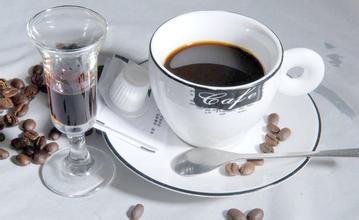
Characteristics, Origin, History and species Morphology of Colombian Coffee beans
History tracing Editor Colombian Coffee Brand Colombian Coffee Brand (9) the history of coffee cultivation in Colombia can be traced back to the Spanish colonial era in the 16th century. there are also many theories about the history of coffee in Colombia: one: it is said to have come from the island of the Caribbean and by sea through El Salvador in Central America. Second: in 1808, a priest obeyed the law.
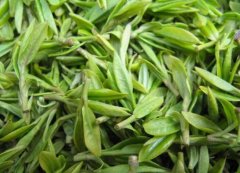
What is the ranking of the top ten famous teas in China? where do the three common black teas come from?
China has a history of more than 5000 years, and the history of tea can be traced back to 5000 years ago. The origin of tea drinking is not really known, and the origin of tea culture in China began according to folklore in 2737 BC when the second emperor of China, Shennong, studied plants and herbs when the leaves of camellias in the courtyard were thrown into his pot of boiling water. At this time, tea is mainly regarded as a drink.

The difference between Yunnan Red Golden Needle Black Tea and Yunnan Red Golden Bud Black Tea Guide to Dianhong Golden Needle Golden Shoots
Yunnan black tea has a long history in China, which can be traced back to several centuries ago. Mythology and archaeological studies suggest that China may have started drinking tea as early as 3000 years ago. In China, what we usually call black tea is called black tea, while aged, fermented tea such as Pu'er tea is called black tea or black tea.

Guatemala Flower God Coffee Manor-Raminita Manor Guatemala Antigua Coffee beans
Exchange of professional baristas Please pay attention to the coffee trees in the coffee workshop (Wechat official account cafe_style) and the soil in all the estates. Soil tests are carried out twice a year. Raminita Manor is very careful when using products that can increase production. Some trace elements such as zinc, boron and copper are sprayed about three times a year on the back of the leaves.

The Fusion of Italian Coffee-the difference between the temperature of Hot Water in Italian Coffee Machine and American style
The fusion of espresso-the difference between the temperature of hot water in espresso machine and American style, but Italians like to drink plain coffee, that is, Italian concentrated and Italian concentrated relatives and friends: short strong Ristresso, long strong Lungo, etc., or Italian macchiato with a little milk, which is small and can be finished in a minute. And lattes, cabs, mochas, caramel macchiato
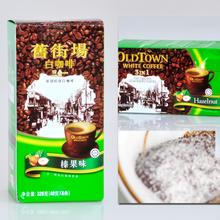
Introduction to the taste and flavor of white coffee in the old street a brief introduction to the brand culture of the old street
The old street white coffee tastes smooth, pure and fragrant, not greasy, without a trace of bitterness, refreshing and comfortable. After drinking, the teeth and cheeks leave fragrance and make people have endless aftertaste. Ultra-low bitterness and acidity: White coffee is baked at low temperature without caramel, removing the bitter and sour taste produced by high-temperature carbon roasting, minimizing the bitterness and acidity of coffee, and retaining the natural flavor and rich flavor of the original coffee.
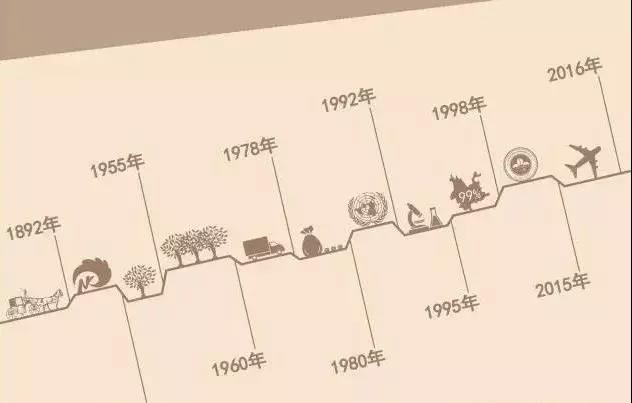
Yunnan Baoshan iron pickup | Chinese Yunnan small grain coffee Baoshan old variety iron pickup
The history of coffee cultivation in Yunnan can be traced back to 1892. A French missionary brought coffee to Yunnan from abroad and successfully planted it in a valley in Binchuan County, Yunnan Province. the main variety is Iron pickup, the so-called small-grain coffee, commonly known as Yunnan small-grain coffee. Yunnan small grain coffee, Rubiaceae, coffee genus, the planting area is mainly distributed in Lincang, Baoshan, Yunnan, China.

Costa Rican sapphire coffee raw bean fire Phoenix Manor
Since the Tang and Song dynasties, Yanglou Sanquan has been drunk for thousands of years, and the words of Dongzhuang and Sichuan outside the mouth of the east and west are fragrant. This pair of couplets, as well as the old traces in the manor, make people imagine. How many legends and stories there are here can only be seen and imagined. It is conceivable that the former landowner must have been a good hand at making tea, otherwise, there would be no strong aroma of tea and refreshing smell.

Introduction to the Flavor of Iron pickup Coffee Fine Coffee in the producing area of Iron pickup Coffee Manor
Ironpika is commonly found in Jamaica in Central America and Indonesia in Asia. Its fruit is usually large and oval, while its leaves are slender. Like to grow in fertile mountain soil, cold resistance and disease resistance are weak, the yield is low. The famous Jamaican Blue Mountain Coffee belongs to this breed and traces its roots. Typica comes from Ethiopia, the ancient place of origin of coffee.

Kenya SL28 34 hand temperature? Historical Story of K7BatianRuiru characteristics of Kenyan Coffee varieties
Qianjie has recommended Asaria coffee beans from Kenya more than once. I believe you are already very familiar with the cooking details of this coffee bean. Filter cup: V60 filter cup water temperature: 90-92C powder quantity: 15g powder-to-water ratio: 1:15 grind: medium and fine grinding (Chinese standard 20 sieve pass rate 80%) flushing and cooking method: staged extraction with 30 grams of water for steaming, stuffy

Travels to Shenzhen | Bookstore and Coffee, spend the weekend in a literary and artistic manner
Communication of professional baristas Please pay attention to the coffee workshop (Wechat official account cafe_style) people usually run around the city, but no one leaves a trace of softness to each other in busy days; so eager to leave on holiday, to the nearest "far away" is also possible, drag luggage to step off the train, the scene looks like home but not like home. Let's be in a good mood.
The origin of coffee plants, coffee trees, coffee trees.
Professional coffee knowledge exchange More coffee bean information Please pay attention to coffee workshop (Weixin Official Accounts cafe_style) Plant classification The origin of coffee can be traced back to a plant called coffee. There are more than 500 genera and 6000 species of tropical trees and shrubs in this genus. Experts estimate that there are 25 to 100 coffee plants around the world. In the 18th century, Swedish botanist Carlos Linnais (

La Minita Flower God, La Tisa Manor, Farahan Plateau, Guatemala
To really understand the flavor changes and product differences of coffee beans is to understand the production place and growers, different manors with different flavors, or different flavors on different hills of the same manor, and the story behind each coffee bean is what the fragrance wants to know. It can be traced back to which plot of the estate where the beans came from, or which cooperative or which farmer, chasing the flavor of the region. To